Tunisia
Email | Print | RSS | Share

Free Press Safeguards Democracy

May 03, 2012

As the global leader in democracy promotion, IFES has helped election management bodies (EMBs) around the world set up media centers to facilitate the flow of information and enhance transparency in the electoral process. On World Press Freedom Day, IFES salutes journalists around the world and thanks them for helping safeguard democracy.

Civil Society

Media Centers: Serving Democracy Through the Press

May 03, 2012

As the global leader in democracy promotion, IFES has helped election management bodies (EMBs) around the world set up media centers to facilitate the flow of information and enhance transparency in the electoral process. A media center allows EMBs, the authoritative sources of election news, to distribute real-time information to local and foreign journalists, including updates on the progress of voting and preliminary announcements of election results. For elections, independent media serve to underscore key issues, shed light on candidates and political parties, provide voter education and keep the population updated on electoral developments.

Civil Society

Middle East and North African Nations Examine Political Finance

April 23, 2012

Recent electoral events in the Middle East and North Africa (MENA) region have resulted in calls for greater transparency and accountability. Within this framework, campaign finance has emerged as a key issue.

Civil Society, Political Finance

Finding a Framework for Tunisian Elections

March 15, 2012

As Tunisia continues down the road to reform, IFES, in coordination with the European Union, Carter Center, Democracy Reporting International and the United Nations Development Programme hosted a conference March 12-13 to discuss the future framework for Tunisia’s elections.

Election Law

Tunisia Election Management Body Reaches Masses through Campaign

February 23, 2012

One of the primary challenges faced by the electoral commission in Tunisia in the run up to elections was meeting the public’s demand for information about how voting would take place. IFES worked with Tunisia’s election management body (ISIE) to assist in voter outreach and information via multiple channels.

Civic Education

After the Arab Spring: Challenges for Credible Elections

December 07, 2011

As citizens of the Middle East and North Africa demand democratic reform through the ballot, it is important to understand the steps that must be taken to conduct elections that reflect the will of the people.

Election Law, Electoral Systems, Civil Society

After the Arab Spring: Challenges for Credible Elections

December 07, 2011

IFES will host a panel discussion on the challenges Arab Spring countries face in holding free and fair elections and ensuring an effective transition to democracy.

Election Law, Electoral Systems, Civil Society

National Constituent Assembly Election Results Announced in Tunisia

November 21, 2011

On November 14, Tunisia’s election commission, the Instance Supérieure Indépendante pour les Élections (ISIE), announced the results of the October 23 National Constituent Assembly (NCA) election.

Elections, Political Parties, Voter Turnout

Witnessing Tunisia's Historic Election

October 25, 2011

Tunisia held its first democratic election on Sunday, lighting the way for nations experiencing the Arab Spring. Nicolas Kaczorowski, IFES Country Director in Tunisia, shares his experience of the historic election.

Elections, Constitutional Law

Tunisia: Voting for the 'First' Time

October 24, 2011

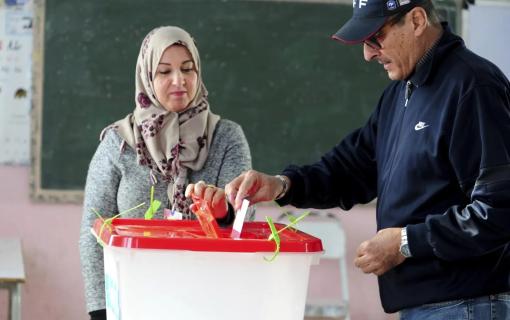
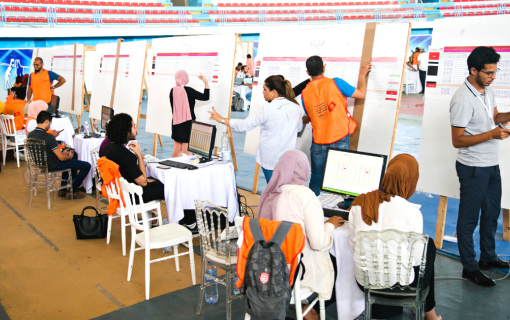
Tunisia held the country’s first free and fair election on 23 October. Millions of Tunisians went to the polls to cast their ballots for the National Constituent Assembly, which will have one year to write a new constitution. Excitement was high as the country that ignited the Arab Spring was also the first of those countries to hold an election. The counting of ballots, which was done by poll workers, went on into the night as election observers watched the process.

Elections, Constitutional Law

Country In Brief

In January of 2011, IFES sent an assessment team to Tunisia to examine the challenges the country faces following the historic events that culminated in the resignation of former president Ben Ali. IFES representatives have met with various stakeholders, including local civil society, political parties, and the two main bodies charged with preparing a new electoral law, the Technical Commission on Political Reform (TCPR) and the Sub-Commission on Electoral Reform.


IFES currently has funding from the US Agency for International Development (USAID) and the Middle East Partnership Initiative (MEPI) to provide technical support to the election management body and other stakeholders, and public information and outreach assistance in the period leading up to the National Constituent Assembly elections on October 23rd. IFES will continue providing outreach assistance in the post-election period. IFES received funding from the British Embassy/Tunis and the Canadian Ministry of Foreign Affairs and International Trade (DFAIT) to support the democratic transition in Tunisia. 

IFES e-NEWS

Sign up to receive our monthly newsletter and event, publication and research announcements.