


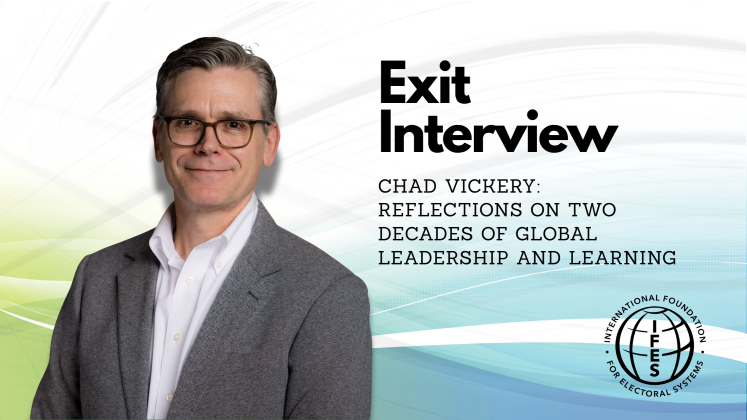
Exit Interview: Chad Vickery
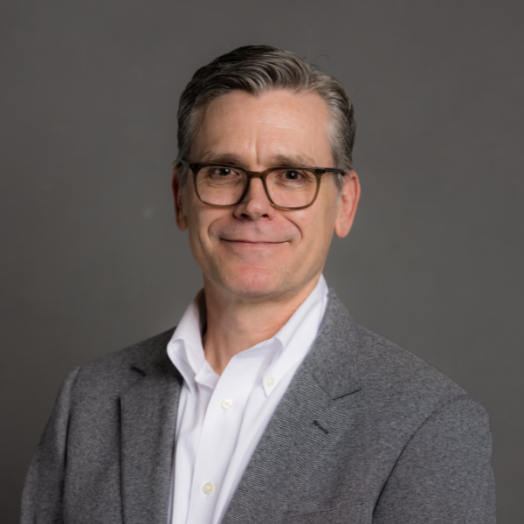
On August 15, 2025, Chad Vickery, IFES Vice President for Global Strategy and Technical Leadership, closed 20 years of visionary leadership and collaboration at IFES. We are grateful for his dedication and passion for the mission of democracy through the years and the inspiring example he leaves for rising leaders.
Vickery starts a new chapter as Founding Partner of Vickery Law PLC. He will continue to serve as an IFES consultant, particularly on matters touching electoral law. We are pleased that Erica Shein, IFES Managing Director of the Center for Applied Research and Learning, has graciously stepped in to serve as Vice President, Global Strategy and Technical Leadership ad interim.
Vickery sat down for an interview to reflect on lessons from 20 years of leadership and support for the democratic journeys of peoples around the world.
Chad, looking back to the day you started at IFES, what would you tell your younger self?
Vickery: When opportunities come up, seize them—don't complain – get creative, work hard, and follow through. Doing so might lead you to travel the world, meet incredible people, and be part of historic moments.
Three factors that will propel your career forward faster than anything else are: having a good attitude, having a sense of humor, and giving your managers confidence—knowing that when you're assigned a task, it will be done well, on time, and humbly.
IFES takes on some tough challenges, whether charting logistics for remote, hard-to-reach electoral districts, supporting countries that are slipping under water like Vanuatu, or helping secure voter rolls in conflict zones.
What has been the toughest country/project you've worked on at IFES?
Vickery: Afghanistan.
Why?
Vickery: We entered a country where donors expected democracy to thrive simply because elections were held, despite lacking the necessary infrastructure or social contract to sustain it.
In situations like this, the international community needs to take the time to understand what is truly required and to grasp what "democracy" means to the citizens of that country.
In Afghanistan, snap elections were not going to help the people recover from years of conflict, build trust among different groups and outside interests, and develop a democracy rooted in their culture within a realistic timeframe. Expecting this to happen in just a few years was a mistake.
IFES has worked in a lot of environments transitioning out of (and sometimes into) conflict. I'm thinking of the eruption of civil war in Sudan, the recent coup in Myanmar, and the full-scale invasion of Ukraine. All of these involved the emergency movement of staff and operations. What's your secret to effective crisis management?
Vickery: Over my twenty years at IFES, I've faced many crises. I've learned that leaders who stay calm and focus on their actions and decisions during chaos help keep the team on track. It is vital to resist feeling overwhelmed by external chaos and to strive to make ethical choices, act decisively, seek innovative solutions, and inspire confidence—even in the face of uncertainty. You must also trust and support your team, consistently communicating that everyone is working together to overcome the crisis.
What is your favorite management and leadership book? Why?
Vickery: Marcus Aurelius' Meditations. Although it's not a traditional business book, it offers valuable advice on leadership and self-management.
Aurelius emphasizes the importance of focusing on what you can control—your actions and judgments—and advises managers to concentrate on team processes, provide clear direction, and manage reactions to external events rather than obsessing over what they can't change. His emphasis on virtues like wisdom, justice, courage, and temperance helps build trust and respect within a team. From my experience, when trust and respect decline, so does team performance.
Importantly, Meditations also emphasizes the importance of accepting change—embracing it is crucial for modern managers navigating dynamic environments. It reminds us to adapt, promote innovation, and build resilience within teams. By focusing on internal virtues and understanding the nature of change, managers can lead with integrity, make wise decisions, and motivate their teams to reach shared goals—making it a truly valuable resource for anyone in leadership.
Finally, one principle that guided my work at the Center for Applied Research and Learning was its focus on a rational and objective approach to decision-making. Managers should depend on data, logic, and sound judgment rather than being influenced by emotions or personal biases.
What is one piece of advice for future Vice-Presidents at IFES?
Vickery: As you assume this role, remember you are now a steward of an organization with a significant global influence. Your words and actions, whether in large gatherings or individual conversations, reflect the legacy of dedicated individuals who have shaped IFES' success.
Honor this platform by embracing the opportunity, trusting the exceptional team supporting you, and confidently leading IFES into a new chapter.
Strive to strengthen the organization and promote democracy worldwide, so that when you pass the VP role to your successor, you can be assured you've left a lasting impact.