


Assessing the Impact of Foreign Aid Rollbacks on Civil Society
The global funding landscape for the defense of democracy greatly changed in early 2025 with near-total reductions in U.S. foreign assistance, historically one of the sector’s largest global funders and champions, and subsequent reductions in foreign aid by other major government donors.
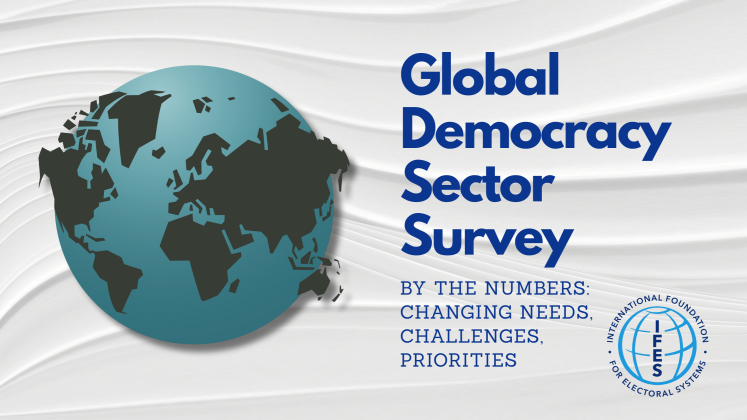
Through a global survey, the International Foundation for Electoral Systems (IFES) set out to understand the pressing needs, challenges, and priority issues for domestic civil society organizations (CSOs) working in democracy and governance around the globe. Given the diversity of the sample, the survey respondents’ experiences can be reasonably generalized to the experiences of national and local CSOs across the democracy and governance community. This presentation summarizes the survey data and main findings. It is our hope that others will be able to use this information in their ongoing efforts to meet the needs of the democracy and governance community.
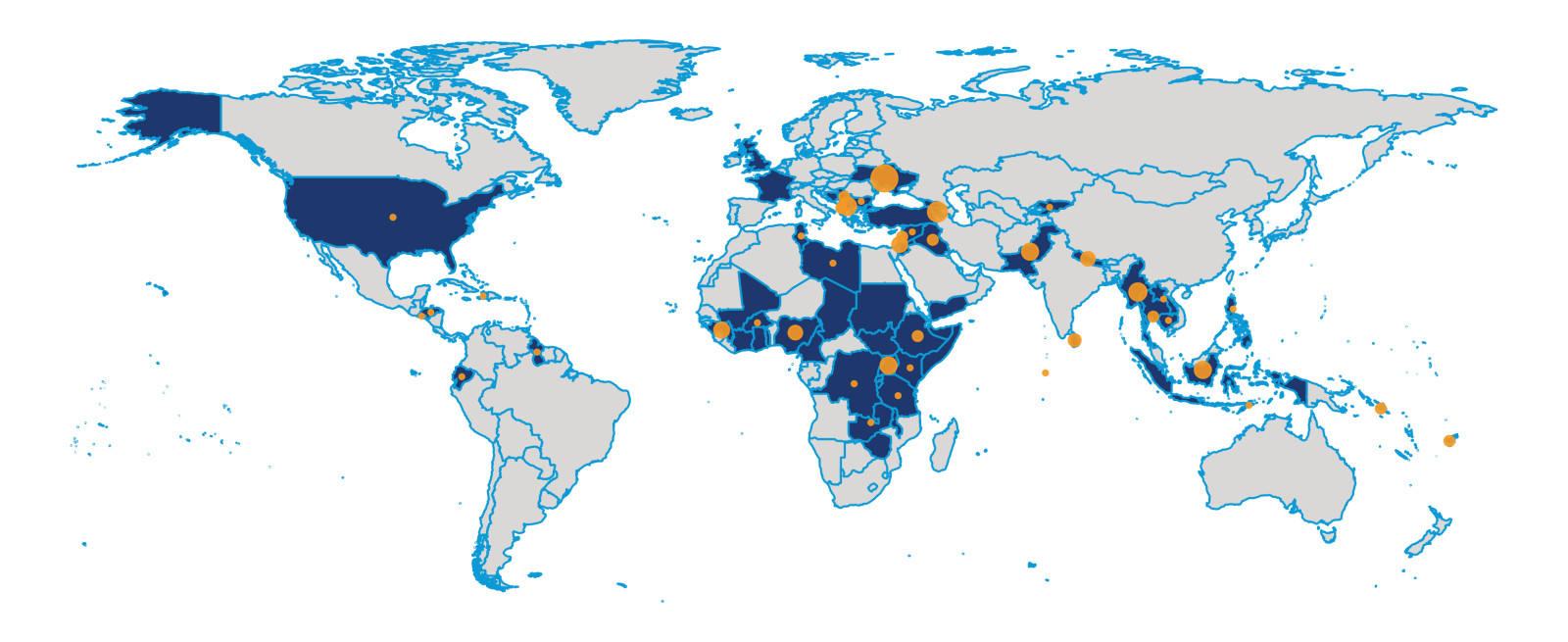
The survey sample includes respondents from every region of the world. Orange dots indicate the 42 countries where the CSOs are headquartered. The size of those dots represents how many CSOs from that country are in the sample (ranging from 1 to 19). The countries shaded in dark blue indicate all 62 countries where respondents have worked in the last 5 years.
Key findings:
- 84% of respondents lost funding in 2025 due to US and/or other governments’ foreign aid cuts, and the same proportion anticipate further cuts to their operating budgets in 2026. The full impact of these cuts to civil society organizations is still being realized.
- Looking ahead to the next 2 to 3 years, 36% of respondents have little to no confidence they will be able to deliver the programs/services at the same level they were previously. The future of democracy and governance work is in jeopardy globally.
- 87% of respondents report receiving some new financial support this year, but only 5% say the new support is mostly offsetting their losses. New funders and new funding opportunities are sorely needed.