International Day of Education
How IFES Co-Creates Civic Education with Young People
The International Day of Education is an opportunity to celebrate the power of education.
Education is transformational in the lives of young people, and never more so than when they have ownership and a vision for the future, inspiring them to grow into active and engaged community members and leaders.
The International Foundation for Electoral Systems (IFES) embeds this approach into its programs year-round by engaging young people in the design and development of its civic education programs. In both its university- and community-based civic education programming, IFES partners with young people to assess important topics and challenges, adapt content to reflect young people’s lived realities, and create pathways for sustainable and lifelong learning. By co-creating civic education, IFES advances young people’s democratic citizenship as well as their ownership over creating more resilient democracies.
Baseline Assessments
The first touchpoint with young people in the co-creation process is through baseline assessments. IFES begins planning its civic education programs with a participatory evaluation of the type of content that should be covered as well as the types of skills that young people are interested in sharpening. Most importantly, however, IFES’ assessments require the active engagement of diverse populations of young people.
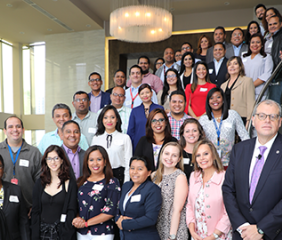
An example of this is IFES’ assessment tool used to create its civic education course for young people with disabilities, Engaging a New Generation in Accessible Governance and Elections (ENGAGE). Piloted in Dominican Republic, the assessment convened young people, both with disabilities and without. Together and through focus group discussions, they explored young people’s interest in civic and political participation and challenges they face to their engagement. The assessment revealed the unique combination of ageism and ableism that young people with disabilities face and the limited opportunities young people with disabilities have to serve as leaders.
As a result of the assessment, IFES built the ENGAGE curriculum with a focus on the participation of young people with disabilities in civic and political life, and leadership skills such as public speaking. ENGAGE has since been successfully implemented in eight countries. Alumni have gone on to leadership roles in election management bodies, organizations of persons with disabilities, and elected office.
Learner-Driven Content Adaptation
IFES continues to adapt civic education content based on the changing contexts, interests, and challenges faced by young people. Content adaptations not only keep civic education relevant, but they also contribute to greater democratic resiliency by finding new ways to support young people’s democratic engagement even in closing and closed civic spaces.
IFES’ global Strengthening Engagement through Education for Democracy (SEED) methodology informs its university-level civic education course, Democracy: From Theory to Practice. In Ukraine, the course, which has reached over 20,000 students across 80 universities and vocational schools, was forced to quickly adapt following the 2022 full-scale Russian invasion of Ukraine.
With the war came new considerations, including destroyed academic buildings and displaced students and teachers, threats to Ukrainian democracy, and stressors to students’ and teachers’ mental health. To address the first issue, IFES adapted the course for virtual and asynchronous learning, supporting students and teachers in adapting to the new course format. In response to teachers’ suggested updates to course topics and materials, IFES also created a supplemental coursebook with lessons on human rights during war, war crimes, and martial law to better address these topics in class. Finally, IFES offered mental health resources to teachers, such as online stress management events, and to students, teaching them how to prepare for evacuations.
IFES’ learner-driven course adaptations were critical in keeping students democratically engaged while also recognizing their lived experiences. As a result, 84 percent of students surveyed during the course agreed that it helped them learn to be active in helping rebuild and establish peace to strengthen Ukraine.
Youth-led Community Initiatives
To extend learning beyond the classroom and into communities, IFES integrates mechanisms for post-workshop and post-course application of knowledge and skills. Designed and led by young people, these community-based initiatives are part of each IFES civic education program and include mentorship and support for learners in planning, execution, and evaluation and learning. These initiatives serve a dual purpose: they help to cement civic and political practices in young people’s daily life as well as encourage intergenerational learning and collaboration.
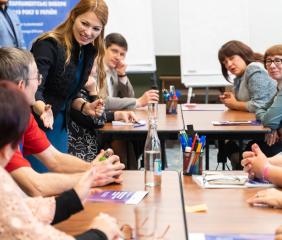
As part of its civic edutainment workshop in Papua New Guinea, IFES increased young people’s knowledge on democracy, elections, and social cohesion, encouraging participants to share key messages on democratic participation with their communities. To do this, IFES also provided participants with a toolkit of educational games and activities on these topics and training on how to lead each game. Workshop participants then led activities in their communities, reaching hundreds of community members with information about good governance and electoral participation. In many cases, workshop participants conducted several activities across different communities and with people of all ages.
In reflecting on their activities, workshop participants shared that they felt these initiatives strengthened their leadership and confidence as well as made civic discussions more common, increasing dialogue and participation among community members. Holding events in churches and settlements also made activities accessible to different community members, and group discussions and play encouraged persons with disabilities to participate. As a result, IFES’ civic education approach emphasizes lifelong learning and young people’s ongoing contributions to community, country, and democracy.
Education is the most powerful tool for cultivating a lifetime of participation in governance and civic life. And youth ownership is a force multiplier for civic education. On this International Day of Education, IFES celebrates the young people who have informed and designed our civic education programs. Ultimately, the impact of civic education extends beyond the classroom or workshop into the lives of people of all ages, across their lives, everywhere, and helps to build resilient democracies that deliver for all.
Reflection from a young participant in Papua New Guinea
“The work I conduct[ed] in my community has really changed the way my community sees me, now they respect me a lot. I am not just facilitating awareness, but I am also shaping perspectives, introducing civic rights and responsibilities and inspiring action among young people and driving change in the lives of many individuals.”